
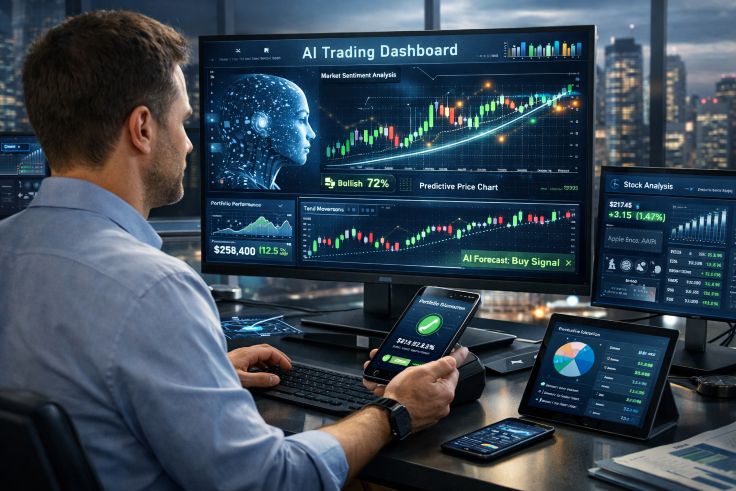
JPMorgan estimates that artificial intelligence is increasingly influencing investment decisions across financial markets, while retail investors continue adopting advanced digital tools at a rapid pace. As these developments accelerate, intelligent trading technology has become a major topic of discussion among investors seeking better market insights and portfolio performance.
Traditional investment research has long relied on company filings, earnings reports, economic data, and analyst recommendations. Investors often spend significant time evaluating information before making decisions. Supporters of this approach argue that human judgment remains essential because markets are influenced by factors that algorithms may not fully understand, including investor sentiment and unexpected geopolitical events.
AI-assisted trading platforms offer a contrasting model. These systems can analyze large volumes of market data within seconds, identify patterns, and generate forecasts. Data from Nasdaq and research published by Deloitte indicate that machine learning tools are increasingly being used for risk analysis, market screening, and portfolio optimization. Many platforms now provide automated alerts, predictive analytics, and personalized investment recommendations.
The debate centers on whether these innovations genuinely improve investor outcomes. Advocates note that AI tools can reduce research time, uncover hidden market trends, and help investors manage diversified portfolios more efficiently. Experts at McKinsey & Company note that advanced analytics can support faster decision-making and improve access to sophisticated investment techniques previously available mainly to institutional investors.
Critics, however, point to important risks. Forecasting models depend heavily on historical data and may struggle during unusual market conditions. Research from the Bank for International Settlements highlights concerns about algorithmic biases, overreliance on automation, and the potential for similar models to amplify market volatility when many investors react to the same signals.
Looking ahead, AI-powered investing is likely to become more common as technology improves and costs decline. Rather than replacing traditional research entirely, many investors may combine human analysis with advanced digital tools. This blended approach could shape the next phase of retail investing while encouraging broader adoption of data-driven portfolio management.
